
Brown Bear
Ursus arctos
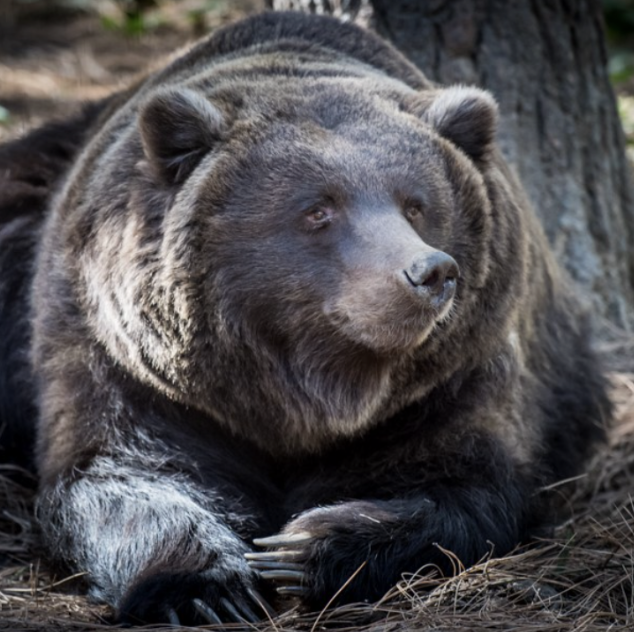
Animal Ambassadors
Yak
Because of their wide range across multiple continents, there are many subspecies of brown bear. The term “grizzly bear” is typically applied to the populations of smaller inland bears, as opposed to individuals living along the coast. The largest subspecies in North America is the Kodiak bear, found only on the Kodiak Archipelago in Alaska. This population has remained genetically isolated since the last ice age, making them one of the most distinct subspecies. Although brown bears used to be native to this region, these animals were unfortunately extirpated from most of the continental U.S., including California and Oregon.
Despite their reputation as fierce predators, brown bears are highly omnivorous; they’ve been recorded to eat more types of food than any other bear species. Their diet is dependent on the season and where an individual bear lives. For example, Yellowstone bears have diets consisting of around 50% meat, whereas the diet of bears in the nearby Glacier National Park consists of only 11% meat. In regions where food quality is typically poor, mature bears can weigh as little as 160 pounds. On the Kodiak Archipelago, where salmon is available for much of the year, bears range in weight from 260-1400 pounds! On average, though, most brown bears fall in the range of 300-500 pounds. Brown bears can change size seasonally as well, sometimes doubling their weight in preparation for winter. Although brown bears aren’t true hibernators, they do sleep through much of the winter, requiring large fat stores to sustain them.
Yak (F) Born: 1991 | Arrived: September 1992
Yak was one of a pair of siblings that were orphaned near Soldotna, Alaska in 1991. It’s unclear what happened to their mother, but the cubs were captured and transferred to our facility because they were far too young to survive on their own. Unfortunately, many large carnivores like bears are unsuitable for rehabilitation because the risk of releasing a habituated bear is too high. If these carnivores don’t retain their natural fear of humans, they pose a risk to us and to themselves.
Gilbert (M) Born: December 2, 2023 | Arrived: July 2024
Gilbert was orphaned after a shed hunter in Montana killed Gilbert’s mother to save his own life. His initial rehab was done at Montana Wild for about three months. A new enclosure was built at Wildlife Images and was completed just in time for his arrival in July 2024, where he will live out his life.
Diet:
Highly varied: grasses, shoots, tubers, berries, fruit, flowers, acorns, pinecones, mosses, fungi, insects, clams, salmon, small mammals, beached whales, ungulates, carrion
Highly varied: grasses, shoots, tubers, berries, fruit, flowers, acorns, pinecones, mosses, fungi, insects, clams, salmon, small mammals, beached whales, ungulates, carrion
Range:
Eurasia and North America
Eurasia and North America
Lifespan:
25+ years / 4o years
25+ years / 4o years
Habitat:
Tundra, alpine meadows, deciduous or coniferous forests, mountainous regions, coastline
Tundra, alpine meadows, deciduous or coniferous forests, mountainous regions, coastline
Length / Wingspan:
5-9 feet
5-9 feet
Weight:
160-1400 lbs
160-1400 lbs